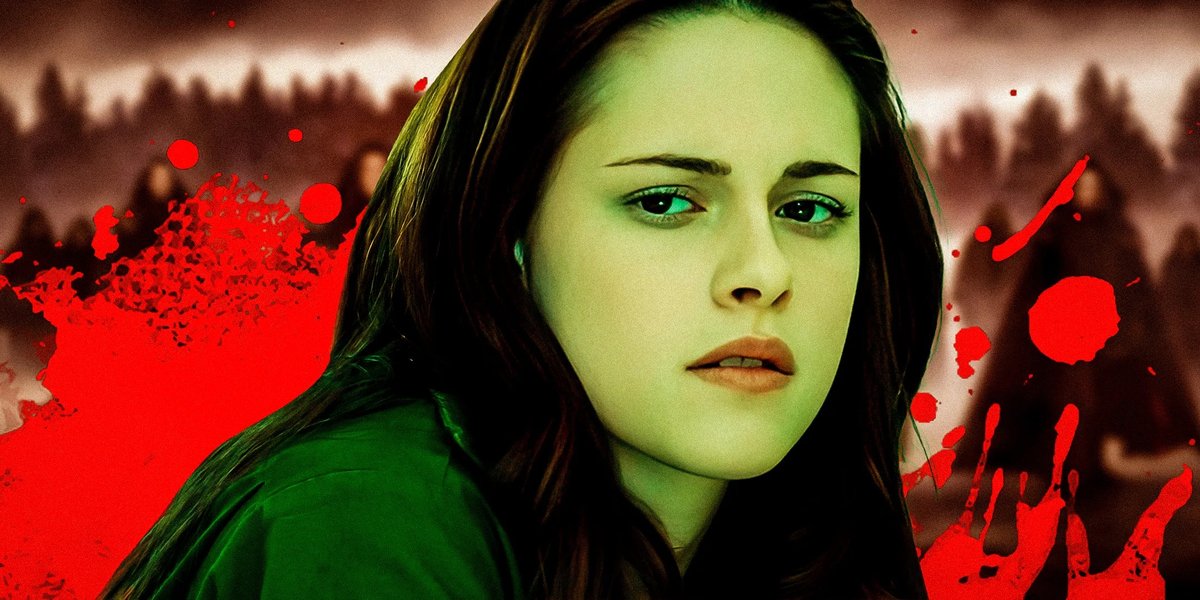
Kristen Stewart’s career milestones paint the portrait of a performer who has consistently defied expectations, evolving from a child actor to a global superstar, and then reinventing herself as an indie icon. Understanding her trajectory, especially her age during these pivotal shifts, is key to appreciating her unique journey before and after the cultural phenomenon of Twilight.
From early roles that showcased a raw, unpolished talent to critically acclaimed performances that earned her Oscar nominations, Stewart's path has been anything but conventional. She’s navigated intense scrutiny with a fierce commitment to authenticity, shaping a career that prioritizes artistic integrity over commercial safety nets.
At a Glance: Kristen Stewart's Enduring Evolution
- Early Start, Early Acclaim: Debuted at age 9, secured a major role in Panic Room by age 12, establishing a foundation of gritty realism.
- The Twilight Era: Became a global sensation as Bella Swan from ages 17 to 22, achieving unprecedented fame and financial success.
- Post-Twilight Pivot: Intentionally shifted to independent cinema, earning critical adoration and becoming the first American actress to win a César Award.
- Oscar-Nominated Performer: Achieved an Academy Award nomination for Best Actress for her transformative role in Spencer.
- Beyond the Screen: Expanded into directing, screenwriting, and advocacy for LGBTQ+ rights, mental health, and environmental causes.
- Fashion Icon: Established herself as a gender-fluid style icon and Chanel ambassador, influencing fashion trends globally.
The Unconventional Roots of a Future Star
Born Kristen Jaymes Stewart on April 9, 1990, in Los Angeles, California, Kristen was destined, in a way, for life in entertainment. Her father, John Stewart, was a stage manager and TV producer, while her mother, Jules Mann-Stewart, worked as a script supervisor and director. This wasn't a family pushing for a child star, however; Kristen herself developed an early interest not in acting, but in writing and filmmaking. Growing up largely in Los Angeles, with a brief stint in Colorado, she was homeschooled, which perhaps fostered the independent spirit that would come to define her career.
From Early Roles to "Panic Room": Stewart's Pre-Twilight Foundation
Kristen Stewart didn’t leap directly into stardom. Her career began with a small, uncredited role in the Disney Channel film The Thirteenth Year in 1999, when she was just 9 years old. This blink-and-you’ll-miss-it appearance was merely a prelude to the project that would truly launch her.
The Breakthrough at Age 12: Panic Room (2002)
Her first significant role came in 2001's The Safety of Objects, but it was her performance in David Fincher's thriller Panic Room (2002) that truly put her on the map. At age 12, Stewart captivated audiences as Sarah Altman, the diabetic daughter of Jodie Foster’s character, trapped in a safe room during a home invasion. Critics lauded her mature, intense performance, particularly her ability to hold her own opposite a seasoned veteran like Foster. This role wasn't just a big break; it solidified her reputation as a young actress capable of conveying complex emotions with a quiet intensity.
Building a Diverse Portfolio: The Teen Years (2002-2007)
Following Panic Room, Stewart didn't rest on her laurels or jump into mainstream teen fare. Instead, she consciously pursued a string of challenging, often independent, character-driven films. This period, spanning her early to mid-teens, was crucial in honing her craft and demonstrating her versatility.
- Speak (2004): At age 14, Stewart took on the demanding role of Melinda Sordino, a traumatized high school student who stops speaking after an assault. This indie film earned her significant critical praise for her nuanced portrayal of internal pain, largely without dialogue.
- Zathura: A Space Adventure (2005): A more mainstream family film, this allowed her to showcase a lighter side, though still grounded in realistic reactions to fantastical circumstances. She was 15.
- The Messengers (2007): Venturing into horror, Stewart played Jess Solomon, a teenager tormented by ghosts. This marked a foray into a genre that would surprisingly align with her future mega-hit. She was 17.
- Into the Wild (2007): Arguably one of her most acclaimed pre-Twilight performances, Stewart played Tracy Tatro, a young singer who briefly connects with Christopher McCandless. Directed by Sean Penn, this role showcased her ability to evoke poignant vulnerability and longing. Again, age 17.
- The Cake Eaters (2007): Another independent film where she played a complex character, further cementing her preference for rich narrative and emotional depth.
By the time 2007 rolled around, Kristen Stewart had already built an impressive and varied filmography. She was known for her naturalistic acting style, her intense gaze, and her knack for portraying alienated or deeply internal characters—qualities that would soon be magnified on a global scale.
The Twilight Era: A Global Phenomenon and Its Aftermath
Everything changed for Kristen Stewart in 2007 when she was cast as Bella Swan in the film adaptation of Stephenie Meyer’s massively popular Twilight Saga.
Becoming Bella Swan (2008-2012)
The first Twilight movie premiered in 2008, when Stewart was 18 years old. The film, and the subsequent four sequels (one of which was split into two parts), exploded into a global cultural phenomenon. As the intensely shy, somewhat awkward human girl who falls in love with a vampire, Bella Swan became a beloved figure to millions of readers and viewers worldwide.
The Twilight saga earned Stewart immense fame, placing her among Hollywood's highest-paid actresses by 2012. It was a whirlwind of red carpets, fan hysteria, and unprecedented media attention. For five years, her face was on billboards, magazines, and merchandise across the globe. You might even wonder Kristen Stewart's age in Twilight as the saga unfolded, watching her grow up on screen alongside her character. By the time the final installment, Breaking Dawn – Part 2, premiered in 2012, she was 22 years old.
While Twilight brought undeniable commercial success and a fervent fanbase, it also brought intense scrutiny, tabloid attention, and a critical response that often pigeonholed her performances. Despite the immense pressure, the experience provided a platform that ultimately allowed her to pursue the independent and challenging roles she truly desired.
Post-Twilight Reinvention: The Indie Darling Emerges
The moment the Twilight saga concluded, Kristen Stewart made a deliberate pivot. Instead of leveraging her global fame for more blockbuster franchises, she consciously retreated into the world of independent cinema, choosing projects that prioritized complex character studies and artistic merit. This strategic shift marked her reinvention as a serious, critically acclaimed actress.
The Defining Roles of a New Era (2014-Present)
Her post-Twilight choices showcased a fearless commitment to challenging herself and her audience. She embraced roles that were often unconventional, sometimes divisive, but always deeply thought-provoking.
- Clouds of Sils Maria (2014): This was a monumental turning point. At age 24, Stewart delivered a subtle yet powerful performance as Valentine, the personal assistant to an aging actress (played by Juliette Binoche). Her nuanced portrayal earned her widespread critical acclaim and, notably, made her the first American actress to win a César Award (the French equivalent of the Oscar) for Best Supporting Actress in 2015. This award was a clear signal to the industry that she was a force to be reckoned with outside the shadow of Twilight.
- Still Alice (2014): In the same year, Stewart played Lydia, the estranged daughter of a linguistics professor battling early-onset Alzheimer's (Julianne Moore, who won an Oscar for the role). At age 24, Stewart's empathetic performance as a supportive but struggling daughter showcased a maturity and depth that resonated with critics.
- Personal Shopper (2016): Reuniting with Clouds of Sils Maria director Olivier Assayas, Stewart starred in this psychological thriller as Maureen, a personal shopper and spiritual medium grieving her dead brother. Her performance, largely solitary and internal, was hailed as a masterclass in conveying raw emotion and existential angst. She was 26 years old.
- Charlie's Angels (2019): Stewart surprised many by starring in the reboot of Charlie's Angels. At age 29, she brought a fresh, edgy, and often comedic energy to the role of Sabina Wilson, proving she could handle action and mainstream appeal while still infusing her unique persona.
- Seberg (2019): Playing the iconic actress Jean Seberg, Stewart delved into the true story of a Hollywood star targeted by the FBI. Her portrayal of a woman under immense psychological duress further cemented her reputation for tackling complex, often tragic, real-life figures. She was 29 years old.
- Underwater (2020): A return to a more genre-driven film, this sci-fi horror flick saw Stewart as a mechanical engineer trapped at the bottom of the ocean. Her grounded, no-nonsense performance was praised for anchoring the high-stakes thrills. She was 30.
- Spencer (2021): Her most critically celebrated role to date, Stewart embodied Princess Diana in this biographical drama. At age 31, her transformative performance earned her an Academy Award nomination for Best Actress. She meticulously captured Diana's ethereal grace, inner turmoil, and fragile humanity, earning accolades for her precision and emotional depth.
This post-Twilight period wasn't just about gaining critical respect; it was about Stewart asserting her identity as an artist. She actively sought out directors and projects that aligned with her vision, demonstrating a discerning eye for material that allowed her to explore the human condition in all its messy complexity.
Beyond Acting: Directing, Advocacy, and Cultural Icon Status
Kristen Stewart's influence extends far beyond her on-screen performances. She has consciously used her platform to pursue other passions and advocate for causes close to her heart, solidifying her status as a generational icon.
Stepping Behind the Camera: The Director's Chair
Remember her early interest in filmmaking? Stewart began to actualize that ambition in the mid-2010s. In 2017, at age 27, she made her directorial debut with the short film Come Swim, which premiered at the Sundance Film Festival. This experimental piece showcased her unique artistic vision, blending abstract visuals with a deeply emotional narrative. Since then, she has continued to expand her presence behind the camera, working on screenplays, indie productions, and various feminist projects, reflecting her long-held passion for cinematic storytelling. She's not just an actress; she's a burgeoning auteur.
A Voice for Change: Advocacy and Authenticity
Stewart is openly queer and has become a vocal advocate for LGBTQ+ rights, using her platform to speak out for equality and acceptance. Her transparency about her identity and relationships has been instrumental in breaking down stigmas and inspiring younger generations, making her a relatable figure for Gen Z.
Beyond LGBTQ+ rights, she also champions mental health awareness, environmental causes, animal rights, and women’s empowerment in entertainment. She doesn't shy away from uncomfortable truths, consistently using her voice to push for a more inclusive and understanding world. Her commitment to authenticity, even in the face of public scrutiny, has resonated deeply with fans and critics alike.
The Chanel Muse: Fashion's Punk-Glam Icon
Kristen Stewart is also a renowned fashion icon and a long-standing ambassador for Chanel. Her distinctive "punk-glam" or "gender-fluid" aesthetic has made her a style trailblazer. She effortlessly blends high fashion couture with edgy streetwear, constantly challenging traditional notions of femininity and masculinity on the red carpet and beyond.
From walking in Paris Fashion Week to fronting sustainable fashion campaigns, Stewart's style is as compelling and authentic as her acting. She has graced the covers of prestigious magazines like Vogue, Elle, and W Magazine, consistently pushing boundaries and proving that true style is about self-expression.
Navigating Fame with Fierce Authenticity
Kristen Stewart's journey from a child actor to an Oscar-nominated indie icon is marked by her unwavering commitment to authenticity. She experienced the pinnacle of global fame with Twilight, the kind that strips away privacy and amplifies every move. Yet, she managed to emerge from that spotlight with her integrity intact, refusing to conform to Hollywood's conventional molds.
Her career milestones are not just about box office numbers or awards; they are about a personal evolution. She learned to embrace her unique voice, channeling her experiences with fame and scrutiny into performances that are often raw, vulnerable, and deeply human. Her choice to pursue challenging, independent roles speaks volumes about her artistic priorities, demonstrating that true success, for her, lies in creative fulfillment rather than commercial omnipresence.
What's Next for Kristen Stewart? The Future is Hers to Write
Kristen Stewart's career is a testament to the power of artistic conviction and resilience. She has transformed from a global superstar often defined by a single role into one of the most respected and versatile actresses of her generation. Her journey from child actor to Twilight phenomenon, and then to a César and Oscar-nominated independent film powerhouse, showcases a rare blend of talent, courage, and self-awareness.
As she continues to explore directing, champion important social causes, and redefine fashion, Kristen Stewart remains a dynamic and vital voice in entertainment. Her path serves as an inspiring blueprint for artists who dare to follow their own instincts, proving that genuine impact often comes from defying expectations and staying true to oneself, no matter the spotlight. The story of Kristen Stewart is still being written, and it promises to be as compelling and unpredictable as her career has been thus far.