Beyond the shimmering skin of its iconic vampires and the intense, star-crossed romance that captivated a generation, The Twilight Saga stands as a monumental achievement in cinematic history. It's a story of meticulous planning, rapid production, and a fan base that shattered box office records. Understanding The Twilight Saga Film Release Dates and Production Timeline isn't just about dates; it's about tracing the journey from page to screen, revealing the creative decisions, challenges, and triumphs that forged this cultural phenomenon.
As a journalist who’s spent years dissecting the mechanics of blockbuster franchises, I can tell you that Twilight's production story is as compelling as its narrative. It's a testament to the power of adaptation and the raw energy of a fervent fan community.
At a Glance: The Twilight Saga's Cinematic Journey
Before we dive into the nitty-gritty, here’s a quick overview of the saga’s key milestones:
- Initial Development: Started at Paramount Pictures' MTV Films in 2004 with a very different vision.
- Summit Acquisition: Film rights secured by Summit Entertainment in April 2007, committing to faithful adaptations.
- Director's Vision: Catherine Hardwicke kicked off the series, setting its distinct visual style.
- Screenplay Powerhouse: Melissa Rosenberg penned all five screenplays, ensuring narrative consistency.
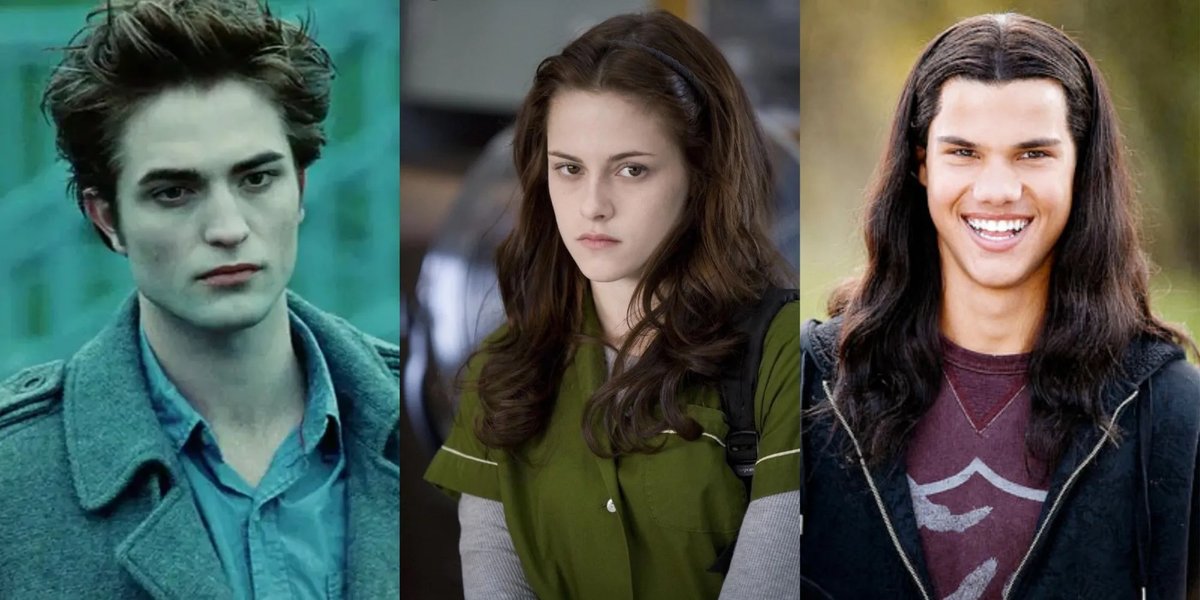
- Main Cast: Kristen Stewart (Bella Swan), Robert Pattinson (Edward Cullen), and Taylor Lautner (Jacob Black) became global stars.
- Five Films, Five Years: A rapid-fire release schedule delivered a new installment almost annually from 2008 to 2012.
- Box Office Behemoth: Collectively grossed over $3.36 billion worldwide.
- Cultural Impact: Sparked fanatical devotion, merchandising, parodies, and an enduring legacy.
The Genesis: From Page to Paramount to Summit
Before Bella ever stepped foot in Forks, Washington, Stephenie Meyer's Twilight novel was making waves. The film rights journey, however, was a bit of a winding path. Discussions began as early as 2004, with Paramount Pictures' MTV Films initially holding the reins. Their early vision for the adaptation reportedly strayed significantly from the novel's core, even imagining Bella as a track star and Edward as a human. This approach, as often happens in Hollywood, meant the project languished in development hell.
Enter Summit Entertainment. In April 2007, Summit acquired the film rights, signaling a pivotal shift. Their commitment was clear: a close, respectful adaptation of the novels that had already captivated millions. This decision, to prioritize fidelity to the source material, proved to be one of the smartest moves in the franchise's history, immediately endearing it to the burgeoning fanbase.
Crafting the First Spark: The Production of Twilight (2008)
With Summit on board, the race was on. The goal was to bring Twilight to the big screen with urgency, capturing the zeitgeist of the books' popularity.
The Creative Minds Behind Forks
Catherine Hardwicke was brought in to direct, known for her raw, authentic style, particularly evident in films like Thirteen. Melissa Rosenberg, a seasoned screenwriter, took on the monumental task of adapting Meyer's novel. Rosenberg worked under immense pressure, racing against the clock to complete the script before the impending WGA strike. She masterfully condensed material, ensuring the key character arcs and emotional journeys remained intact – a feat Meyer herself found "the best I could have hoped for." This collaboration established the foundational tone and visual language for the entire saga.
Finding Bella, Edward, and Jacob
Casting was, of course, paramount. The chemistry between the leads would make or break the film. Kristen Stewart, with her expressive intensity, was cast as the reluctant heroine, Bella Swan. For the enigmatic vampire Edward Cullen, Robert Pattinson’s brooding charm won over audiences. Kristen Stewart's Twilight age was a topic of much discussion, reflecting her character's youthful vulnerability on screen. Taylor Lautner landed the role of Jacob Black, initially a smaller part that would grow exponentially. His dedication to physically transforming for the sequels – gaining 30 lbs of muscle – famously saved his role as the werewolf, impressing filmmakers with his commitment to the character's evolution.
On Set: Capturing the Pacific Northwest Aura
Principal photography for Twilight was a whirlwind, lasting just 44 days and wrapping up on May 2, 2008. Hardwicke embraced a distinctive style, using hand-held cinematography to lend the film a gritty, "real" feel that grounded the supernatural elements. Filming primarily took place across the Pacific Northwest, utilizing locations like Kalama High School and Madison High School, as well as St. Helens, Oregon, and Pasadena, California, to create the iconic moody atmosphere of Forks.
One fascinating production detail involved the vampire cast. To achieve their otherworldly grace and powerful fighting styles, they underwent rehearsals with a dance choreographer. This extra layer of physical training brought a unique elegance to their movements, setting the Cullens apart. Even the iconic Volvo C30 driven by Edward, a conscious choice over the novel's S60-R to better suit his character, became a recognizable symbol, reportedly boosting C30 sales and enhancing Volvo's appeal among younger demographics.
The Saga Unfolds: Film by Film Breakdown
The release schedule for The Twilight Saga was remarkably aggressive, ensuring the fervent fan base rarely had to wait long for their next cinematic fix.
1. Twilight (Released: November 21, 2008)
- Director: Catherine Hardwicke
- Writer: Melissa Rosenberg
- Core Plot: This is where it all began. Bella Swan moves to Forks, Washington, and falls deeply in love with the mysterious, perpetually seventeen-year-old vampire, Edward Cullen. Their burgeoning relationship faces immediate threats from other, more hostile vampires, leading to Edward's family protecting Bella. Despite his love, Edward steadfastly refuses to transform Bella into a vampire, setting up one of the saga's central conflicts.
- Box Office Impact: The film exploded onto the scene, grossing an impressive $35.7 million on its opening day alone and going on to earn $393.6 million worldwide. This proved Summit’s gamble on a faithful adaptation had paid off handsomely.
2. The Twilight Saga: New Moon (Released: November 20, 2009)
- Director: Chris Weitz
- Writer: Melissa Rosenberg
- Core Plot: Following a dangerous incident at Bella's birthday, the Cullen family departs Forks, believing their presence endangers Bella. Plunged into a deep depression, Bella finds solace and a growing, complicated friendship with Jacob Black, who is revealed to be a Quileute werewolf. Jacob and his pack protect Bella from the vengeful Victoria. A misunderstanding leads Edward to believe Bella has died, prompting his desperate attempt at suicide in Italy, only to be stopped by Bella and Alice. They face the enigmatic Volturi coven, ancient and powerful vampire royalty, who release them under the condition that Bella will eventually become a vampire. Back in Forks, Edward proposes to Bella, offering to transform her only if she marries him.
- Box Office Impact: New Moon wasn't just a sequel; it was a phenomenon. It broke records for advance ticket sales and secured the biggest midnight opening at the time, pulling in $26.3 million domestically. Its opening weekend gross of $142.8 million made it the ninth-highest opening weekend in domestic history, showcasing record-breaking box office success that continued to build. It also set a new benchmark for the biggest single-day opening with $72.7 million domestically.
3. The Twilight Saga: Eclipse (Released: June 30, 2010)
- Director: David Slade
- Writer: Melissa Rosenberg
- Core Plot: Bella grapples with the immense implications of marrying a vampire, torn between her love for Edward and her deep affection for Jacob. The fragile peace in Forks is shattered when Victoria returns, creating an army of newborn vampires to exact her revenge on Edward and Bella. This existential threat forces an unprecedented alliance between the ancient enemies: Jacob's werewolf pack and the Cullen family. Together, they fight a brutal battle. In the aftermath, Edward proposes to Bella again, and she finally accepts, but with the firm condition that he will turn her into a vampire immediately after their wedding.
- Casting Note: A notable casting change occurred for Eclipse, with Bryce Dallas Howard replacing Rachelle Lefevre as the villainous Victoria due to scheduling conflicts.
- Box Office Impact: The fervor continued. Eclipse surpassed New Moon's midnight opening record, bringing in $30 million domestically. It also set a record for the biggest Wednesday opening with $68.5 million, solidifying the saga's financial dominance.
4. The Twilight Saga: Breaking Dawn – Part 1 (Released: November 18, 2011)
- Director: Bill Condon
- Writer: Melissa Rosenberg (and co-produced by Stephenie Meyer)
- Core Plot: The long-awaited wedding finally takes place, uniting Bella and Edward in matrimony. Their honeymoon leads to an unexpected and perilous development: Bella becomes pregnant with a half-human, half-vampire child. The rapid, unnatural growth of the fetus poses life-threatening complications for Bella, forcing desperate measures and further deepening the rift between the Cullens and Jacob's pack, who initially view the unborn child as an abomination.
- Production Note: Filming for this installment required complex logistics, including negotiations for tax credits in Louisiana, a testament to the extensive planning required for a franchise of this scale. Stephenie Meyer herself took on a co-producer role, ensuring even closer fidelity to her narrative vision.
5. The Twilight Saga: Breaking Dawn – Part 2 (Released: November 16, 2012)
- Director: Bill Condon
- Writer: Melissa Rosenberg (screen story)
- Core Plot: The saga reaches its dramatic climax. Bella, now a powerful, newly transformed vampire, revels in her newfound strength and abilities. She quickly discovers she possesses a unique "shield" power, which she learns to control and enhance. Her primary mission becomes protecting her extraordinary daughter, Renesmee, whose rapid aging and unique nature draw the dangerous attention of the enigmatic Volturi coven. The film culminates in a tense, epic confrontation on a snowy field, where the Cullens and their vast array of vampire and werewolf allies stand united against the Volturi, prepared for an all-out war to protect their family.
- Resolution: The film famously deviates from the book's ending in its depiction of the final battle, opting for a thrilling, visceral sequence that ultimately leads to a peaceful resolution, reinforcing the power of family and unity.
The Unseen Hand: Music and Its Enduring Echo
The atmosphere of The Twilight Saga films owes much to the critically acclaimed soundtracks that accompanied each installment. Alexandra Patsavas, a renowned music supervisor, was the architect behind the musical identity of all original motion picture soundtracks. Her curation became a hallmark of the series, blending indie rock with haunting orchestral pieces.
- Twilight: Carter Burwell composed "Twilight: The Score," providing the ethereal backdrop. The soundtrack itself debuted at No. 1 on the Billboard 200, selling 165,000 copies in its first week. Paramore's "Decode" became an iconic hit, certified Platinum and even nominated for a Grammy, perfectly capturing the film's brooding romance.
- New Moon: Alexandre Desplat took over for "New Moon: The Score," adding a new layer of emotional depth.
- Eclipse: Howard Shore (of Lord of the Rings fame) composed "Eclipse: The Score," injecting a sense of epic tension.
- Breaking Dawn – Part 1: This soundtrack gifted us enduring pop hits like "A Thousand Years" by Christina Perri and "It Will Rain" by Bruno Mars, further cementing the saga's crossover appeal.
These soundtracks didn't just accompany the films; they defined them, becoming essential components of the Twilight experience for fans.
Critical Divide vs. Fan Devotion
It's impossible to discuss The Twilight Saga's production and release without addressing the fascinating dichotomy of its reception. The films, by and large, received generally negative to mixed reviews from critics. Many found fault with the acting, dialogue, or pacing.
However, this critical opinion often stood in stark contrast to the overwhelming enthusiasm of the book's fans. For them, the films were a beloved, cinematic realization of a world they cherished. The success wasn't merely financial; it was a cultural phenomenon driven by passionate fan engagement, proving that sometimes, box office dominance speaks louder than critical consensus. This is a common pattern for adaptations of popular young adult novels, where fidelity to the source material often trumps cinematic innovation for the core audience.
The Lasting Spark: Cultural Footprint and Future Horizons
Even years after its final film, The Twilight Saga continues to leave its mark. Its undeniable cultural resonance is evident in various forms:
- Parodies: The saga's intense emotions and unique lore made it ripe for parody. Films like "Vampires Suck" (2010), while critically panned, found financial success tapping into this vein. "Breaking Wind" (2012) also took a comedic stab. Beyond cinema, it was parodied in Teletoon's "My Babysitter's a Vampire" and briefly spoofed in the animated hit "Hotel Transylvania."
- Beyond the Screen: In 2019, Russian figure skater Alena Kostornaia captivated audiences, and won the European championship, using music from the Twilight and New Moon soundtracks for her free program. Looking ahead, fans will soon be able to build a Lego set based on the iconic Cullen house, scheduled for release in February 2025, a testament to the enduring appeal of the iconic filming locations and set designs.
- Anniversary Re-releases: For the film franchise's 20th anniversary, Lionsgate and Fathom Entertainment are planning to re-release all five movies in theaters from October 29 to November 2, 2025, offering a new generation, and nostalgic fans, a chance to experience them on the big screen.
What’s Next for Twilight?
The "Twilight" universe continues to spark interest. Discussions about possible sequels emerged as early as 2016, with interest in spinoffs surfacing in 2017. More recently, in April 2023, a television series adaptation was reported to be in early development, signaling a potential new chapter for the saga. Even original director Catherine Hardwicke weighed in during November 2023, discussing a potential reboot and sharing her specific casting ideas for a fresh take. The world of sparkling vampires and shape-shifting wolves clearly has more stories to tell.
The Enduring Legacy of a Phenomenon
Tracing The Twilight Saga Film Release Dates and Production Timeline reveals far more than just a list of dates. It uncovers a meticulous journey of adaptation, a testament to passionate filmmaking under intense pressure, and the power of a story that resonated deeply with a global audience. From Summit's crucial decision to embrace the source material to the swift, dedicated work of its cast and crew, the saga’s path to cinematic superstardom was as dramatic and compelling as the story of Bella and Edward themselves.
The films, despite their mixed critical reception, created a cultural moment, influenced trends, and cemented their place as a definitive franchise of the 21st century. As discussions of reboots and television series continue, one thing is clear: the sun will never truly set on the world of Twilight.